Diverticulitis Dining Diet

I’m on a battlefield.  Bombs are going off. I’m in a trench filled with mud and stink.  My socks are wet.  Another bomb explodes overhead. I duck and cover my head. I’m sweating like a red lentil in boiling water. Then out of nowhere – I need to poop, but not in this intestinal muck.  The battle is over.  I have scars. A new day.

Diet is right up there with the other biggies – exercise, sleep and alcohol use. Diet jumped to list top after 3 diverticulitis attacks (two months apart). On these occasions, I woke up at 2am with retching gut pain and the sweats. I felt like I had a flu and food poisoning combination. When I tried to pee, slight pain (inflamed colon pressing against my bladder). After the first attack, I went to the doc who said it was diverticulitis, not uncommon for a man of your age (64 – knocking on the senior citizen’s door). He gave me some nasty antibiotic pills – Ciprofloxacin (very harsh) and Metronidazole ten days on this shit, literally.

Now, the first 24 hours are brutal, but 24 hours later, I’m out running 10k. What the?  On to Dr. Google and his assistant Dr. YouTube – the resounding and agreeable result, drum roll please. You need to switch to a high fibre diet. Ok, can’t hurt, right? My diet is already very good.  More beans please.   The advice was slowly increase fibre.  Did eye? Nope. The gut was yelling at me for the first few weeks, but I pooped on.

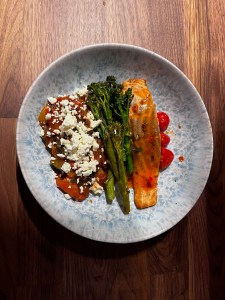
My dietary changes were – psyllium husk fibre every morning (in my blueberry, banana, high protein almond milk and plain yogurt smoothie), beans at lunch (added to my avocado, cheese and egg on sour dough toast). In the evening some high fibre veggies – potatoes, sprouts or beans (roasted chickpeas ever the ready). With these minor additions,  I am getting close to 30 grams of fibre every day. Poops are awesome. I can always tell a good ‘ol fibre poop (no description here, but you’ll know). I also decreased red meat to maybe twice a month (lean sirloin only) and I stopped alcohol consumption (I dunno if it helps, but it doesn’t hurt).  And finally, probiotic Kombucha, every afternoon at 2.

So far, so good. I’m coming on three months and nothing but good poops and evening bean farts (sorry honey). What have I learnt from the experience? One needs to eat what agrees with them (and this changes with age). I changed my diet for medical reasons. Even if I wasn’t scared of impending attacks, adding more fibre to a diet is a great idea. I feel great and really that’s all that matters. Right.
Good Night Irene

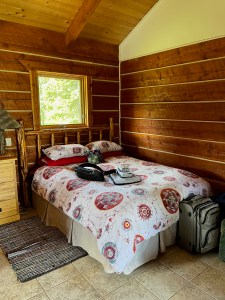
I had a dream we were sipping whisky neat. I threw the glass in the campfire. Darkness surrounded me.  I heard a noise in the bush. Out came a giant Scottish dude named Balvenie. He shouted in an accent I couldn’t decipher.  I got up and ran, fear over my shoulder.  I woke up in the middle of the night sweating. Panting. The next morning, I looked at my watch. Dr. Garmin yelled at me  with a 34-sleep score. Holy shit. Not good. I need to get better.

Now, I’ve always been a great sleeper. I can sleep anywhere – at a movie, concert even while driving (not too often). Sleep is very important right up there with the other two biggies, exercise and diet. But with the invention of smart watches, monitoring is both a blessing and a curse.   How can you not take an interest in your sleep? The device is either yelling at me or stroking me with positivity.

However, how accurate are sleep monitoring watches? When you get a sleep score of 93, they are the greatest invention to man. A 34 score and they are shit. From what I’ve read, watches are very good at monitoring how long you’ve slept and that’s about it. Deep sleep and REM, not so much. I was getting such poor scores on my Garmin (average 82), that I decided to funnel the data into Apple health.  She (you beautiful gem) regularly  gives me a 97-100 score every night, so uplifting. Garmin is nothing more that a scolding old bitty who enjoys picking the wings off flies . Constant low scores surely affects your sleep. We all want a 100 percent right? The highest I’ve ever gotten is 93. Once.

With all these poor scores, I decided to try and enhance my sleep score. First magnesium bisglycinate. Made me sleepy before bed, but if you stop taking it,  your body needs time to readjust. It’s like taking a sleeping pill. Once you use, you become dependant and I don’t want to become dependant on anything, except warm socks in the winter. I tried it for two weeks. No change. Then Gabapentin, another sleep inducing medication.  Same – no change and hard to come off.  Blue filter glasses (I use a reader every night). Nope. In fact for the first week, my score was worse. So none of this shit works – what does work?  Going to bed at the same time. Routine is king. And I’m happy with Apple scores.

Does Garmin really matter – you old cantankerous dick? How do you feel when you put your feet on the floor? Five years ago, I didn’t have a sleep monitoring watch and I felt fine. In fact, I think my sleep has gotten worse (for a time) from the constant nagging and negative Garmin reports. I know more than one person who turns the Garmin sleep data off completely. Switching to the more positive Apple is an eye closer for sure.

Sleep is great. I have a routine and I stick to it. I also make sure my bedroom is cool and dark. And no alcohol. If there’s one good report for Garmin, it’s how shitty your sleep is with even one glass of wine too close to bed. I wonder how many people, like me, who have given up booze after damning sleep reports.  The giant nasty Scottish dude is still chasing me, but good luck trying to catch me.

Sober Sunshine

I’m laying in a flower infested summer field, eyes toward a beautiful blue sky. Warm sunbeams fill my soul. Tranquility I haven’t felt in years. My phone bleeps. I try to ignore it, but it won’t go away. I answer. Hello, this is the wine industry calling. We haven’t seen you in months. Are you ok?  Don’t abandon us.  We were good to you once. Remember the fun? Ok the mornings sucked, but still. We need you. I apologized, hung up and went back to the warm sunshine.  Giving up alcohol is the greatest gift I ever gave myself.
I didn’t stop because I got a DUI or my wife left me or I lost my job. I was a Friday night binge drinker for forty years. Week’s end, I’d come home, sit in my easy chair and drink very expensive wine or single malt scotch (so cultured right). I never had just two glasses. A bottle of wine led to some beers and then ohhhh some weed.  With the cupboards bare, it was Good Night, Irene. I never blacked out. I remember the songs and running rampant though midnight streets at dawn.  I never lost anything but my health.

Mental health issues were the main inspiration for change. I didn’t realize the damage alcohol caused until I gave it up. No booze means, waking up in the morning with a clear head, watching a beautiful pink sun rise and feeling it. No more hangovers and recovery days. No more brain numbness. No more hangxiety – the anxiety you feel the next morning after a night of drinking with your head in your hands asking yourself, why?  Or the depression that follows from the frustration you feel because you just can’t stop or how come you can’t just have two glasses and be done. Mental health issues were literally driving me crazy.

And the sleep issues. Even two glasses of wine devastated my sleep. It took me two weeks sober to get my sleep pattern back to normal.  Now I sleep consistently well.  Some people say they return to dreaming. I never had that problem – drinking nightmares never stopped until I quit.

I don’t know when I realized drinking was doing me harm – possibly retirement because I could drink whenever I wanted. Monday? Haha. It’s not like I have work tomorrow. My job held the bottle in check (very hard to teach grammar hungover). Oh no, it’s Sunday. I can’t drink. I work tomorrow. But once the training wheels were off – whoohoo.  Then came the pandemic. What else do you do? Watching the world slowly unravel while in isolation, please pass me the wine. But once normality returned, I couldn’t stop. Maybe for a couple of weeks or a thirty-day challenge.  Something is wrong here.

And then a switch finally clicked. I stopped. Annie Grace was a big help, along with many YouTube videos and r/stopdrinking (I’m a stocker, but very helpful). Yes, alcohol is bad for your health. I wish I was a two-glasser, but I am not. I like where I am now. I enjoy my mornings. I enjoy my sleep. I feel healthy, mentally and physically. And frankly, I am afraid. I know what one glass leads to and I do not want to travel that road.  I love my victories – sober birthday, sober Xmas, sober vacation. Alcohol takes up too much brain space I need for other activities like enjoying life.

Move It or Lose It

I just turned 65. I am now officially a senior citizen – bring on the discounts, extended health care benefits (in my Province) and my Old Age Security cheque (coming in the new year).  I’ve taken pretty good care of myself over the past few decades (I want to enjoy my retirement). I am physically fit (or so my watch tells me), I have a plan – first exercise.

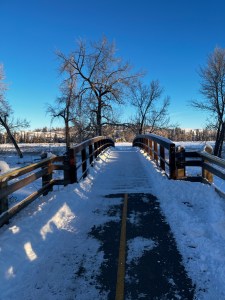
My favourite  motto is  – “Move it or Lose it.” With my exercise plan, it’s not how many kilometres I run or walk, it’s about getting out and moving every day, no matter what weather conditions. Last week we had a  -31C with the windchill snap, but as the Swedes say – “No bad weather, just bad clothing .” Every morning, I get up,  drink half a litre of lemon water and immediately head out the door for a run or walk.

Running is unique – I run to the conditions. If the paths are too snowy, or if it’s too cold, (-15C or more – running gear gets too bulky), I do a 3k walk (in any condition) and run later. I am very lucky because I can afford winter walking/hiking gear – fleece hoodie, puffer jacket, windproof shell, two layers of pants, light gloves inside mitts, toque and a buff for my neck and face. Walking gear for really freaking cold weather (I am good until -25). If it’s -5C to zero get out the shorts and flip flops (kidding). I follow my walk with a 6k run on the treadmill (another luxury, a gift from my daughter).

If I can run outside, it’s a very slow 7k to 10k (winter max). Winter is not the time to set speed records.  Last thing I need is a broken ankle (please see winter emergency rooms). One more item, I cannot hit the trail or path before 8am because it’s too dark out (the sun does not rise before 8:30 – mid winter). Double danger whammy – darkness and ice. The Swedes have another saying, if it’s too dark and cold, go to IKEA. Always sunny among the meatballs and Björn Borg shelves.

Now the best benefit with waking or running  outside are what I call morning bombs. Moving outside in the early morning sun, the radiance fills your bones like drops of sweet honey dew. As you move, you are literally elevated, your entire mood is lifted atop the mountains or clouds. I cannot think of a better mental health medicine than an early morning walk or run. Every Sunday I walk through the forest near my house (another lucky nugget) and feel the energy of nature buzzing in me bones. Even in -25, my bones are tingling. Face stings like a metal glove slap, but the bones are very happy.

Now here’s my weekly movement schedule:

Sun. Mon. Tues. Wed.  Thur. Fri. Sat.
5.5 k nature walk 7k outside run with weights 7k outside run 3k walk/6k dreadmill run with weights 7k outside run 3k walk/ 6k dreadmill run with weights Long run 8-10k

All weather permitting – see, ice, snow, cold and emergency room broken bones. And yes – three fifteen minute weight session each week to keep the upper body muscles strong and osteoporosis at bay (and looking nice in the mirror – vanity goes a long way at 65). And remember as King Julian says, “I like to move it,  move it.”  It is NEVER too late.