James by Percival Everett

'James' Author Percival Everett on Freedom, Violence, and the Lure of ...Ok, what am I reading right now?  I wanted to explore humorous novels, after all summer is near, so chillin’ in the hammock with some chuckles, ideal. Let’s start with the ever unreliable – “Hey Siri, what are the funniest books ever written.”  She gave me a list with “James “by Percival Everett on, but WTF – slavery is not funny. You’re fired Apple Irish voice. However, I’m glad James popped up because it’s a great read and it brought back many education journey memories.

The novel is based on “The Adventures of Huckleberry Finn,” written in 1884 by Mark Twain, the ex-river boat pilot. However, the new version is written from James’ (the new Jim) perspective. Both follow his escape from Miss Watson because she is about to sell him down the river. Literally, to New Orleans. They must escape and make some money to buy freedom for their family and move to Illinois, a free state.

“James,” the re-creation, is amazing. His vocabulary when speaking with other slaves is right out of Oxford (not the Faulkner home), but when talking to white folk, he plays slave – “Mos’ peoples likes money mo’ ’n anythin’ else. White folks, anyways”.  He’s also a proficient reader, writer and teacher. And why not? Who’s to say he couldn’t.  I love this take.

The  first escape  is to Jackson’s Island where he meets up with Huck.  The boy fakes his death to escape the violence from his drunk and abusive father, Pap Finn, just like in the original. From here Jim and Huck make a raft and head up the river to freedom in the north. While travelling, James pens intriguing passages about his situation, until he loses his pencil.

Both novels take place in Southern antebellum society before the civil war, giving an accurate and terrifying portrait of slave life in the United States.  However, the lynching scene differs. In “James” it takes place over a stolen pencil and it’s an accused slave who is murdered by a gang of white assholes.  However, in Twain’s novel, Colonel Sherburn, a white dude and a wealthy shop owner, challenges and calls out the mob gathered to lynch him after he shoots town drunk Boggs.  When I first read “Huckleberry Finn,” this scene had me in tears of anger.

I also loved Norman – the light skinned companion who passes as a white dude (not in the original – even Twain could’ve imagined this situation). The ending of the novels is slightly different.  In the original Jim is freed by Miss Watson but loses it to help Tom Sawyer (a prick), after he’s shot, but finally his freedom is secured. Huck then “lights out for the Territory.”  Whereas in “James,” we have fireworks, but hope (not too much spoiler here).

I read the Twain novel just as I started my university journey. My first English class was  American Literature with Gary Frame, the best teacher I ever had. I always felt sorry that poor guy because he put up with an overly zealous student who waited outside his door almost every day to ask questions. I’m sure as he walked back to his office, saw me he said, “Oh shit not again.” He surely wanted to light out for the Territory.

I loved “James” and I’m sure if Gary Frame were still teaching, the novel would be on his syllabus. I remember almost every book I read in that class.  Ok, time to re-read “Big Sur and the Oranges of Hieronymus Bosch,” but no recreation here.

Thursday Murder Club – A Book Review

Yes, I’ve started a new book. The mystery never ends.  The novel is the first in a very successful mystery series by Richard Osman (four at last count).  The stories revolve around a group of  grey-haired sleuths  who live in a retirement home in Kent, England.  I mean what else do you do when you retire? Screw knitting, right?
In this novel, a dude is murdered in his home, smacked over the head with a blunt object. Beside the dead body is a picture of two other dudes with a ton of cash surrounding them.  How did the picture get there? And who took it?

A  group of seniors are on the prowl, lead by Elizabeth with her suspicious police and government connections.  She also clandestinely worked outside the Isles in her past. Holy MI-5 or 6  Batman (we are not totally sure which agency  – as any good spy would nurture).  Next is Joyce, a kindly old chatter box. She worked as a nurse, previously. We have journal entries from her, exposing  information about the murders but also her very humorous naivety in contemporary issues;  for example the surprise when she finds out you can send photos on your phone.  We also have Ibrahim, the psychologist and Ron, an ex-union thug to round out the club. A very interesting and diverse group.

On the cop side we have Donna, who left the London Met due to a romantic spurn  and Chris the overweight, junk-food addict who can’t seem to get his physical being on the right track. Donna is starting at the bottom of the police pecking order in Kent; she was higher up in London, so the reboot is difficult. There is a love / hate relationship with the two groups, but the amount of information Elizabeth gleans assists the police enormously. Both coppers see (however grudgingly) the  benefits an ex MI-6 or 5  agent brings to the table.

Then we have another murder, Ian Ventham, a pure asshole who only cares about financial gains. He’s murdered during a protest at the Cooper’s Chase retirement home.  He leads a group of bulldozers and diggers early one morning with the intent of ripping up a century old graveyard. The senior’s protest sends a strong screw you corporate vibe.  Suspicion hangs in the air.

Excellent read – not too heavy and not too bland. I never thought a group of seniors in a retirement home for detectives, but it works well. We also have some strong social comments – loneliness and grief among our seniors. And  how shitty it is when your kids don’t visit (I’m going to call my parents right now). We are NEVER too busy, right? And memory loss, another aging issue. I learnt a very neat trick from Elizabeth who jots down a question two weeks ahead in her journal – what’s the license plate number of the car seen outside the retirement home ? In two weeks she must answer the question correctly (not sure if it’s a spook trick or senior aid). It’s a great memory test and I’m considering employment, if I remember

Two Novels, a post

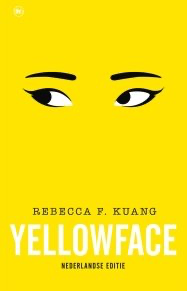
Right now, I am reading two novels. The first is “Yellowface” by Rebecca Kuang. Holy shit. My first reaction is I will never publish a book on the traditional road. What a nasty, horrible process. How does one keep their sanity? As a theme in the book, it’s not always possible. If I were ever to publish, it will be self-published. I will be my own team.  I never want to go through all that shit. What a horror story.

And social media, my goodness, the novel makes we want to delete  all my socials (again).   Professional online people are packs of blood thirsty  animals dedicated to destroying the lives of others. Who  would want to deal with that crap?  How do these predators wake up and look in the mirror every morning.

Ethnic quotas?   Only one Asian story a year, please. And do not criticize the white  authors, so says the right wing cancel culture groups. Holy limiting Batman. So much for writing about whomever and whatever.  However,  I find it ironic that an Asian girl is writing about a white girl who stole a book from an Asian girl. But that’s the point,  right? It gets across very well. 

I know the book is a satire,  but at one point we find out for many authors themain reason for writing is immortality? Are you serious?  The need to live forever through your art.  A lasting impression should be through the people you love not through some nasty assholes on the internet. Is this where we are as a society? 

A great eye-opener. A shocking read. However,  whenever I feel the need to publish,  I’m going to pull out this book – motivation indeed. Thank goodness Faulkner or Woolf or any early twentieth century writer were never around to experience this mess. Or maybe they were, but we never heard about it.

And if the publishing industry wasn’t horrible enough, the other book on  my night table is “The Road” by Cormac McCarthy. I’ve read many of his works and if one idea threads through his work, it’s the belief humans are horrible, blood thirsty creatures (see above article).  If destructive social media isn’t bad enough, how about storing people in a basement so you can eat them later. Or is there a relationship here? Isn’t this what the internet is all about – eating people alive.

The dystopian novel takes place after some horrible catastrophe. A boy and his father are travelling across a landscape filled with ash and destruction. All life destroyed except for a few dogs and travelling bands of nasty people who are ready to kill, steal or eat you. The pair are attempting to make their way to the coast where it’s warm and hope possibly lives.

The dad is dying and the boy was born into this decaying world. He knows about birds, but he’s never seen one. The journey leaves you  feeling cold and damp.  They camp, eat food from tins when they can, pull a shopping card filled with their few life possessions (I love the mirror on the cart – not a bad idea for all shopping malls). Not a happy novel,  but one that makes harsh comments on the nature of society and where we are heading.

Even though hope runs through the novel – the boy is hope. The major question is, who wants to live in a world where we are afraid to help people and human creatures are ready to devour us?  Why are we so horrible to one another?

 Ok, I gotta go and plant a tree or hang a decoration on one. 

Night by Elie Wiesel

A student gave me a copy of “Night” and it sat on my book shelf for many years. I was scared to read it. Then my niece was assigned the book for her high school English course. I pulled the book off the shelf, blew the dust off  and pealed back the cover. I wish I had jotted the student’s name in the cover.

I have to say this is one of the hardest books I’ve ever read. Right now, I am sitting in my comfy chair with a cup of coffee, knowing I could go into the cupboard and grab a snack or I could put on my warm winter coat and  walk out the door anytime I want.  But  the pages show me a sixteen-year-old kid, running twenty kilometres in freezing temperatures with only a thin musty snow-covered blanket around him, fearful that if he steps out of line an SS solider will shoot him in the back. And if he falls, he will be trampled to death. We should be so thankful for all we have.

While reading the book, it is hard to imagine how a group of people could treat others so horribly. Packing them like cattle into train cars with no room to sit, standing for hours with no food or water. The train stops. Bodies are thrown out like garbage and then the train moves on – lives forgotten. It is hard to imagine the cruelty because I have never experienced anything close to the lack of humanity carried out by the Nazis. And I wish I could say that society has learnt, but we have not. One only needs to look at the Chinese treatment of the Uyghurs to realize the lessons of the holocaust are silent to some governments.

The book follows the sixteen-year-old author from his home in Sighet (a part of Hungry in 1944), to Auschwitz in Poland then to Buna also in Poland and finally to Buchenwald in Germany where he is finally liberated by the Americans. So many horrors along the way. A major take away for me is I hadn’t realized that initially the Hungarian Jews were not worried about the Nazis. In 1944, news radio kept professing that the Red Army was close at hand. No need to worry, they thought, the Russians are on the doorstep. The Germans will be defeated. It’ll be all over before we are rounded up but it was not to be.  Soon the ghettos arrived and then the trains.  Once transported these degraded humans were starved and dying and then it was too late to fight back.

I am so glad the book is taught in high school. I am equally glad I’ve had the opportunity to read the book after so many years. It is an important reminder what can happen when an egomaniac takes power and uses the destruction of a group to obtain power. Wow sounds familiar even today. When will we learn?

And finally, Happy Hanukah

Then She Was Gone

I just finished “Then She Was Gone” by Lisa Jewell. I don’t know how to categorize the book – Mystery? Thriller? Whatever the genre, I enjoyed the read, but holy darkness, Batman. We’re talking Chris Nolan cape crusader. Not for this review, but why is everything so dark these days – books, movies. What does this say about our society?
The novel is about the Mack family living a very common existence in North London, dinner parties, good grades, high school romance. Until a horror beyond horror hits the family. The family’s golden child, Ellie, is snatched. She’s gone. The action rips the family apart, creating weird broken relationships. The parents, Laurel and Paul, split up because Ellie’s mother devotes all her time to finding her favourite child. She gives up on the living family.

Then just as she’s recovering and starting to move on, she meets Floyd. They hook up in a coffee shop near her home. The new BF has a daughter who looks very familiar. But the relationship is not just good sex and nice clothes. We find that Floyd has a strange past with Ellie’s math tutor just before she was abducted or ran away from home. We aren’t sure at this point.

When she meets Floyd, we are happy because Laurel is moving on. Great. But it doesn’t take long until something doesn’t feel right. Is he a fraud? He doesn’t appears like his book sleeve photo – he’s a published maths for dummies author. It’s just not right. Then the truth falls like a cannon ball in the shallow end of a kid’s pool and darkness reigns.

And my goodness we have some weird relationships in the novel. Poppy, Floyd’s daughter will need some serious therapy for her entire life. Hanna, the not so golden child,  and her brother Jake have very difficult relationships with their mother. The daughter lives a lonely existence with a secret she cannot share with her mother. The only way Laurel can keep in contact with her estranged daughter is by cleaning her house and with that task she spies. The son lives in Devon (away from mother) with a wife who manages his life. Laurel’s  ex-husband remarries and they rarely make contact. Holy estrangement Batman.

And darkness? Holy cow, I’m not going to describe the basement and what goes on in there, but it kept me awake for nights. And the Irish monster, please, please may I never meet such a creature. Another screwed up relationship is between Floyd and his past. There’s not a skeleton in his closet, it’s an entire graveyard.

I couldn’t put the book down. Jewell is very good at making me want to burn another page. But if I may suggest, don’t read it before you go to bed and make sure you read it in a brightly lit safe place and please lock all your doors and windows.

Subtle Art of Not Giving a F*ck

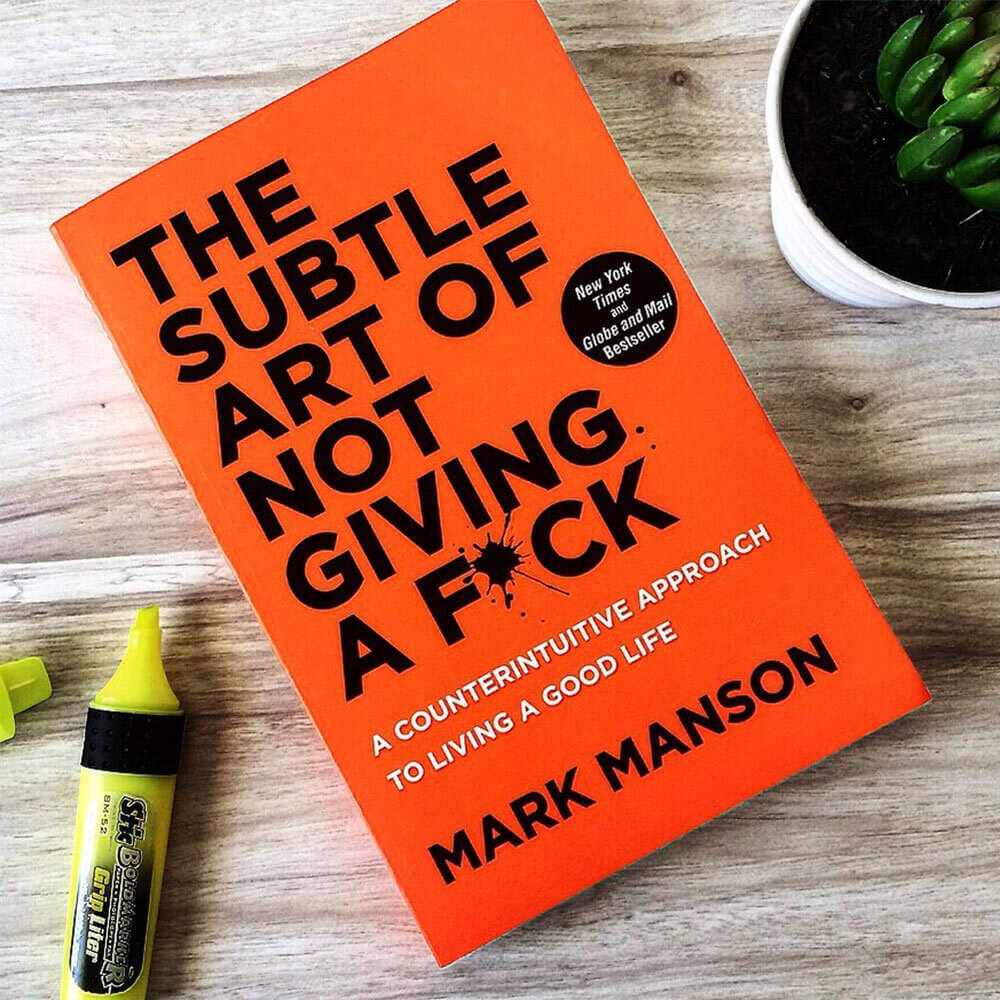
Speaking of bloggers, I’ve been reading Mark Manson’s masculine heavy self-help book. Most definitely written for a male audience. It’s not that women don’t  like profanity and penis references, but sometimes his ideas flow like beer in a dusty  rusty old tavern, “Look man, sometimes you just gotta not give a fuck. Know what I mean? There are other important things to give a fuck about. Be selective about your fucks.” Now, tell me that’s not meant for a male audience.

The book borders on the “Don’t Sweat the Small Stuff” idea.  Should you care about the insignificant car parked in front of your house? Man, so many things matter more, like how to treat people with more respect. He also brings in some mindful ideas. You can’t control how people react, but you can control how you react to things. If a car is parked in front of your house and you don’t like it. It’s your problem. Your reaction shouldn’t be slash its tires. Nah, think about it. Is it really a problem? And if you slash the tires, doesn’t it just bring more problems, like jail time (I’m watching Beef on Netflix right now – this advice seems appropriate, yea?)

It’s all about choice and values. I give value – how much do I want or need a non-communicative relationship? Do I need or want this job or  is the amount of money in my bank account important. The message in the book, however, is not new. It does have value, though.

I do like the stories. The Japanese dude hiding out in the Philippines for ten or fifteen years after the war ended. The psycho lawyer who’s following the author around because she believes together, they can find a cure for death.

The book is ok, but his ideas come from other texts. I am also keeping in mind it was written by a blogger. A dude who has no professional credentials for offering any psychological advice. Is this where we are? Internet gurus whose only qualification is a blog. I read that the book was a small article he wrote on his blog. Some publisher thought it was catchy (Isn’t everything with profanity in it?) and bang, pop here’s the long text version and I’ve just made a wad of cash.

Even though I’m ready to toss the “Subtle” book out, I came upon an excellent piece of writing advice.  Just do something. Open the laptop and type– just get something written. A writer was asked how do you write so many books? And he said, “Every day I try to get at least two hundred crappy words written.” Then he goes on to say that just by sitting down and trying to do the least amount of writing, he usually ends up writing much more than that.  Can’t we apply this to everyday? Just do something.  Open the door and walk. Get in the car and go. So much of life to see and feel.

I’m fifty-fifty on this book. Yes, I got some good ideas out of it. Yes, it refreshed ideas that I’d forgotten about. Yes, I finished the book. But always the big question, would I read it again? Meh. Maybe. But there are so many better books on this subject that aren’t so manly like my go to Thich Nhat Hanh.